Request > Games to connect science and policy

Games to connect science and policy

Summary


Type of request: Knowledge Synthesis

The aim of the request is to explore what types of games and game features will ensure for games to become a tool to connect science and policy and lead to an improved science policy interface, acknowledging the balance between integrity of science and fun of playing a game. Also, identifying the enablers and barriers for policy makers to use games as a way of understanding and changing perspectives, as well as knowledge transfer.


Contribute to the open Call for Knowledge for the initial scoping of this request 

Requester:  Ecological Knowledge Games (EcoKnowGames) is funded by the UK Research and Innovation (UKRI) cross-research council responsive mode pilot scheme (MR/Z505833/1)

Eklipse Scoping Group


Methods Expert Group (MEG)
  • Saloni Bhatia – Eklipse MEG Focal point, Ashoka Trust for Research in Ecology and the Environment, India.
  • Nina Nygren – Eklipse MEG Focal point, Häme University of Applied Sciences, Finland.
  • Malavika Hosahally Narayana – Eklipse MEG Focal point, Ashoka Trust for Research in Ecology and the Environment, India.
  • Alister Scott – Eklipse MEG Co-chair, University of Northumbria, UK.
Knowledge Coordination Body (KCB) focal points
  • Sonja Hölzl – Eklipse KCB Focal point, Bavarian Academy for Nature Conservation and Landscape Management (ANL), Germany.
  • Anna Fricke – Eklipse KCB Focal point, Leibniz Institute of Vegetable and Ornamental Crops (IGZ), Germany.
  • Carla-Leanne Washbourne – Eklipse KCB Focal point, The University of Warwick, University College London, UK.
  • Ute Jacob – Eklipse KCB Co-chair, Helmholtz Institute for Functional Marine Biodiversity, University of Oldenburg (HIFMB).
Eklipse Management Body (EMB) contact points
  • Karla E. Locher – Helmholtz Centre for Environmental research (UFZ), Germany.
  • Marie Vandewalle – Helmholtz Centre for Environmental research (UFZ), Germany.


Outputs

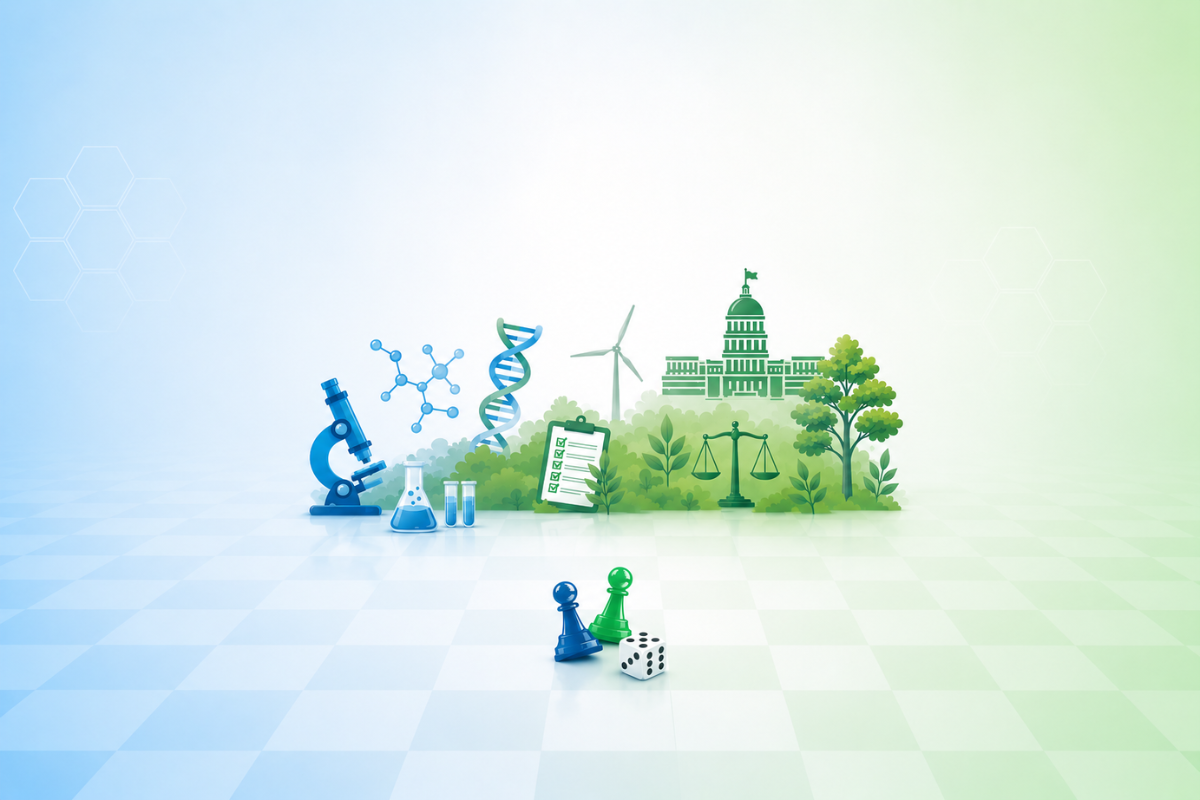
Games are a science-communication tool that allows players to experience scientifically informed contexts and situations that would otherwise be out of reach. Games are also highly interdisciplinary, with important contributions from the arts and humanities, as well as from scientific disciplines, including the social sciences.

Through Eklipse, we would like to explore which types of games and game features will ensure that games become a tool for connecting science and policy and lead to an improved science-policy interface, while balancing the integrity of science with the fun of playing a game. Also, identifying the enablers and barriers for policymakers to use games to understand and change perspectives, as well as to facilitate knowledge transfer.
Specifically, the request will be working on the following themes:

  • To make explicit the role of games as a way to experience alternative perspectives -put policy-makers (and other stakeholders) in others’ shoes.
  • To consider/reflect on the spectrum of games and gamification tools depending on the ambitions of the science -policy connection sought.
  • To consider how scientific data are integrated into game mechanics and how the complexity of a game supports or hinders effective perspective change and policy making
Timeline
  • Request received by Eklipse: 13th October 2025
  • Eklipse Scoping group formed & focal points selected: November 2025
  • Date of the first meeting with the requesters, Eklipse, KCB and MEG: December 2025
  • Date of the second meeting with the requesters, Eklipse, KCB and MEG: April 2026
  • Launch Call for Knowledge (CfK):  8th May 2026
  • Deadline Call for Knowledge (CfK): 22nd May 2026
  • Launch Call for Experts (CfE):
  • Methods protocol open review:
  • Reviewed version of the method protocol:
  • Draft report for peer review:
Scoping phase

The scoping phase is the second step within the Eklipse process. It aims to refine the question, identify how Eklipse could provide added value by being involved, seek knowledge and expertise on the refined question via an open Call for Knowledge (CfK), and provide suggestions regarding methods and resources needed to answer the request.

A Call for Knowledge (CfK) is open from the 8th to the 22nd of May 2026.

The Document of Work (DoW) will be developed to describe the results of the scoping activities and the background of the request, serving as the basis for the call for experts.